




Meet the LC250: Modern Cruiser, Classic Mission
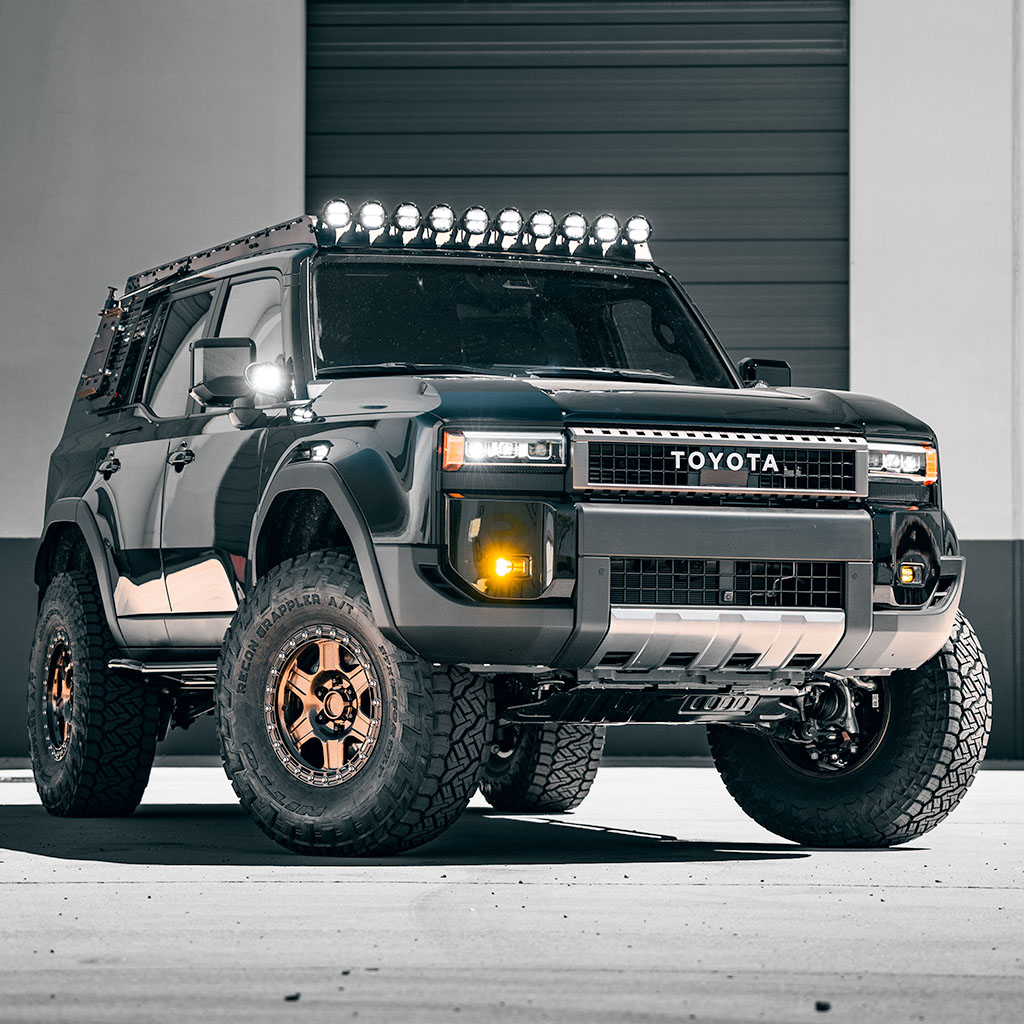
The new Land Cruiser 250 blends legendary durability with hybrid efficiency and tech. This is a perfect foundation for an overland build that eats highway miles and stays composed on rutted two-track. The four upgrades that move the needle first are a low-profile roof rack, rock sliders, a mild preload lift, and practical tire fitment—plus a smart rear-end stability upgrade with billet rear upper trailing arms.
-
Shop racks → Roof Racks
-
Shop sliders → Sliders
-
Shop lifts → Lift Kits
-
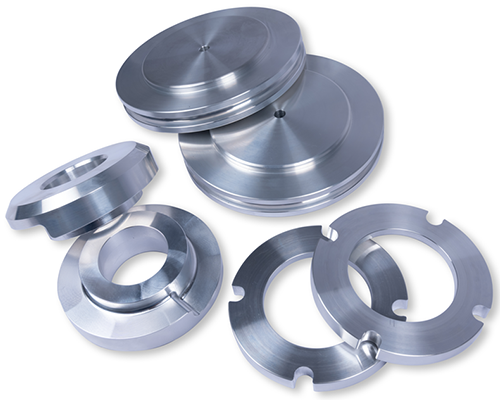
Rear axle upgrade → LC250 Billet Rear Upper Trailing Arms
-
Turn-key install → Westcott Built™ Off-Road Shop
The Land Cruiser 250 Roof Rack: Low Profile, High Utility
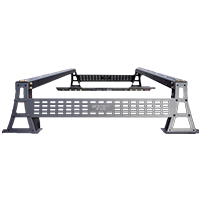
A good Land Cruiser 250 roof rack should carry what you need without sounding like a pipe organ at 70 mph. Westcott’s low-profile, channel-based approach keeps drag and wind noise down while giving you flexible mounting for RTTs, cases, traction boards, tools, and lighting.
Why low-profile matters
-
Lower wind noise and better range on long highway transfers
-
Easier garage/tree clearance than tall baskets
-
Lower center of gravity you’ll feel when the truck is loaded
Channel crossbars = flexible mounting
Westcott’s channel bars accept common T-slot hardware so you can quickly mount tents, Pelican/ROAM-style cases, recovery boards, shovels, and light bars—then tuck wiring inside the channels for a clean, snag-free install.
→ Browse racks: Roof Racks
Tent mounting, done right
-
Support RTT rails with two crossbars minimum; three at hinge ends
-
Match bar spacing to the tent’s rails (don’t “make do”—it increases flex/noise)
-
Use the tent maker’s isolation washers/hardware
-
Re-torque all hardware after your first trip
Wind noise & MPG tips
-
Fit the rack fairing and fine-tune its angle to the windshield
-
Place a crossbar directly under a front light bar to break up whistle
-
Pack hard cases forward, soft goods behind to smooth airflow
LC250 Sliders: Insurance You Can Stand On
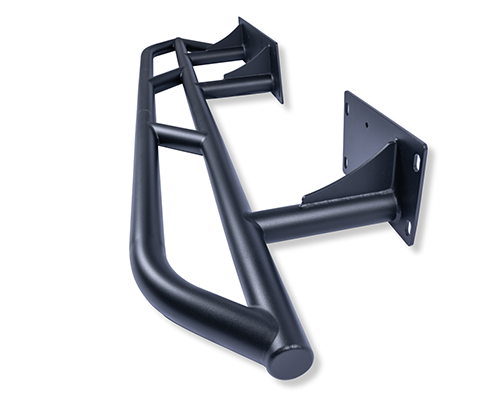
Even mellow forest roads hide surprises. The LC250’s rocker panels are long, low, and expensive to fix—rock sliders protect them, add safe jack points, and serve as daily steps for roof access and kid loading.
What to look for
-
Bolt-on fitment that spreads load into the frame
-
Kick-out option to protect the rear quarter and help pivot around obstacles
-
Dimple-died top plates for traction in rain/snow/mud
-
Durable coating that resists chips and washboard vibration
Upgrade here → Land Cruiser Sliders
LC250 Lift Kit: Why a Mild Preload Lift Is Usually Best
A preload collar lift maintains your factory damper bodies and valving while adding measured preload to achieve height—so the LC250 keeps its refined ride and hybrid composure while gaining stance and clearance.
Advantages over going too tall, too fast
-
Geometry sanity at mild heights (friendlier on CVs/ball joints)
-
Stock-like ride instead of guessing at stiffer valving
-
Faster install/alignment and less downtime
-
Budget room for armor, comms, and storage
Shop lifts → Lift Kits
When to consider UCAs
If you’re chasing more caster after lifting and adding heavier tires/wheels, upper control arms can help dial in alignment and steering return-to-center. For many mild builds, start with preload + alignment and evaluate.
Bonus Stability: LC250 Billet Rear Upper Trailing Arms
If you’re adding roof weight, towing, or running bigger tires, the rear links work harder. Upgrading the rear upper trailing arms adds rigidity and helps maintain pinion angle and axle tracking under load, braking, and articulation—improving straight-line stability and tire wear.
→ Rear upgrade: LC250 Billet Rear Upper Trailing Arms
Tire Fitment for the LC250: Practical Sizing That Works
Tire clearance is a system of tire size (true casing), wheel width, and offset/backspacing—lift height alone doesn’t guarantee clearance.
General guardrails (subject to actual tire run-out and wheel specs)
-
Conservative, daily-driven builds: choose a mild A/T that clears with minimal trimming; prioritize true diameter, not just the sidewall stamp
-
Aftermarket wheels: avoid extreme negative offsets that push the tire into liners/fender corners; conservative offsets often track straighter and rub less
-
Aggressive tread patterns run “big”—expect minor liner work or a clean, strategic trim
Pro tips
-
Measure your chosen tire’s mounted diameter/section width
-
Keep an alignment printout after install (caster/camber/toe = baseline)
-
Re-torque after 250–500 miles and after the first trail day
Smart LC250 Build Order (So You Only Do It Once)
-
Lift + alignment → establish stance/geometry
→ Lift Kits -
Wheels/tires → pick width/offset that clears with minimal drama
-
Sliders → protect the body before the first real trip
→ Sliders -
Low-profile rack → finalize crossbar spacing for tent/cases/lights
→ Roof Racks -
Rear uppers → add stability under load and reduce axle steer
→ LC250 Billet Rear Upper Trailing Arms -
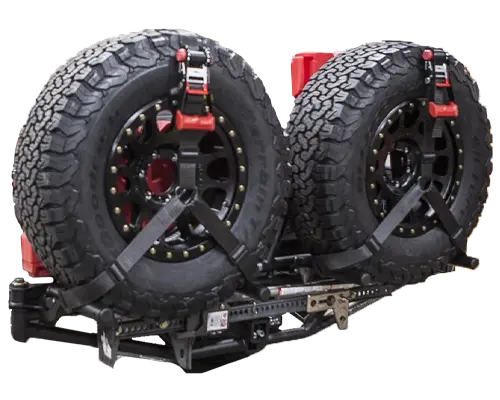
Accessories → recovery boards, shovel/axe mounts, water/fuel, comms, scene lighting
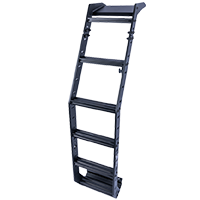
→ Ladder access if needed: Ladders
Prefer turn-key? Book pro install, wiring, and alignment at Westcott Built™.
Drivability & Range: Keep the “Land” in Land Cruiser
-
Pack heavy items low/forward; a quiet, balanced LC250 is a safer, less tiring travel partner
-
Mind GVWR; RTT + armor + water adds up quickly
-
Service rhythm: clean/inspect/retorque fasteners; dust/salt accelerate hardware creep
-
Electrical discipline: route lighting/comms wires inside rack channels, fuse correctly, label at the panel
FAQs (LC250 Overland Build)
Will a low-profile rack carry a tent and cases?
Yes—channel-based crossbars support RTT rails and hard cases when spaced correctly; add a third bar under hinge ends.
→ Roof Racks
Do sliders increase cabin noise?
Quality, tight-tolerance sliders don’t add cabin noise—and often make the truck feel more solid over washboards.
→ Sliders
Does a mild lift require UCAs?
Not always. Many mild setups align within spec on factory arms. If you want more caster with bigger tires, UCAs can help.
→ Lift Kits
What tire size is best for range and drivability?
Moderate A/T sizes with lighter constructions usually deliver the best balance of comfort, braking, and MPG.
Can I DIY the rack/sliders/lift?
Experienced DIYers can, but a professional alignment is mandatory after suspension work, and torque at ride height matters.
Prefer pro help? → Westcott Built™ Off-Road Shop