




3rd Gen Toyota Tundra Build Walkaround: Westcott Designs Fab 4 Bumper, Ditch Lights & Suspension Deep Dive
The 3rd generation Toyota Tundra is a robust platform for customization, allowing enthusiasts to enhance both performance and aesthetics. This article delves into the exciting upgrades available for the Tundra, focusing on the Westcott Designs Fab 4 Bumper, ditch lights, and suspension modifications. Readers will learn about the features and benefits of these aftermarket products, as well as practical installation tips. Many Tundra owners seek to improve their vehicle’s off-road capabilities and visual appeal, and this guide provides solutions to achieve those goals. We will explore the Fab 4 Bumper’s design, the importance of ditch lights for visibility, and the best suspension modifications to elevate the Tundra’s performance.
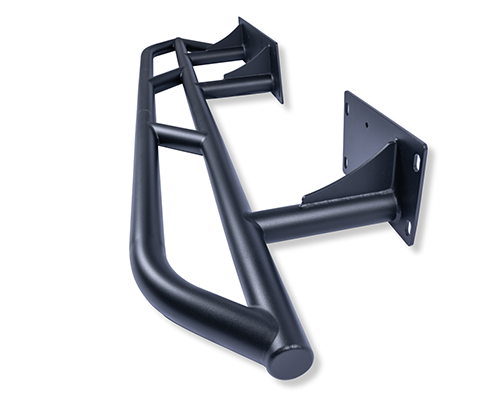
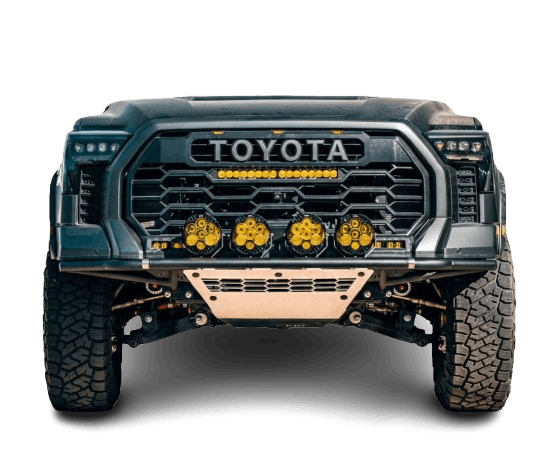
The Westcott Designs Fab 4 Bumper is a premium aftermarket upgrade designed specifically for the 3rd Gen Toyota Tundra. This bumper features a pre-runner style design that not only enhances the truck’s aggressive look but also provides superior protection during off-road adventures. Constructed from heavy-duty steel, the bumper is built to withstand the rigors of off-road driving while integrating skid plates for added safety.
Key features of the Fab 4 Bumper include:
- Pre-Runner Style Design: This design enhances the Tundra’s rugged appearance and functionality.
- Integrated Skid Plates: Protects vital components from damage during off-road excursions.
- Heavy-Duty Steel Build: Ensures durability and longevity, making it ideal for off-road enthusiasts.
The combination of these features makes the Westcott Designs Fab 4 Bumper a top choice for Tundra owners looking to enhance both performance and aesthetics.
Ditch Lights
Ditch lights are essential for off-road visibility, providing illumination in areas that standard headlights may not reach. These lights are typically mounted on the A-pillars of the vehicle, allowing for a wider field of view when navigating through challenging terrains. The benefits of ditch lights include enhanced visibility, improved safety during nighttime driving, and easy installation.
When considering ditch lights, it’s important to choose models that offer optimal lumens and durability for off-road use. High-quality ditch lights can significantly improve safety by illuminating obstacles and hazards that may be hidden in the dark.
Installation Steps for Ditch Lights
Installing ditch lights on your Tundra can be a straightforward process if you follow these steps:
- Gather Tools: Ensure you have the necessary tools, including a drill, wiring harness, and mounting brackets.
- Mounting Brackets: Secure the mounting brackets to the A-pillars of the Tundra, ensuring they are positioned for optimal light output.
- Wiring Connections: Connect the wiring harness to the ditch lights and route it through the engine bay to the battery, ensuring all connections are secure.
Following these steps will help you achieve a successful installation of ditch lights, enhancing your Tundra’s off-road capabilities.
Which ditch light models offer optimal lumens and durability for off-road use?
When selecting ditch lights, consider models that provide high lumen output and robust construction. Look for features such as:
- Lumen Output: Choose lights that offer at least 2,000 lumens for effective illumination.
- Durability Features: Opt for lights with weatherproof ratings and shock resistance to withstand harsh conditions.
- Suitability for Off-Road Conditions: Ensure the lights are designed for off-road use, with features that enhance their performance in rugged environments.
These factors will ensure that your ditch lights provide the visibility needed for safe off-road adventures.
Suspension Modifications
Suspension modifications are crucial for enhancing the off-road capabilities of the 3rd Gen Toyota Tundra. Upgrading the suspension can improve handling, increase ground clearance, and provide a smoother ride over rough terrain. Various lift kits are available, each designed to meet different performance needs and preferences.
Key considerations for suspension modifications include:
- Lift Kits: These kits raise the vehicle’s height, allowing for larger tires and improved ground clearance.
- Improved Handling: Upgraded suspension components can enhance the Tundra’s handling characteristics, making it more responsive on and off the road.
- Installation Considerations: Proper installation is essential to ensure safety and performance, so consider professional assistance if needed.
Further research into the engineering behind lift kits highlights the intricate design and fabrication processes involved in creating effective suspension systems.
Lift Kit Design & Fabrication for Suspension Systems
This research project will be completed with Hendrickson Trailer as the sponsor. The goal of the project is to create a lift kit for a newer suspension system. The lift kit must provide enough lift force to lift an axle off the road and suspend it off the road while in transit. There are similar systems offered for different products at Hendrickson, but the configuration of this system is such that new brackets must be designed. The benefit of such a system is a reduction in wear on the lifted tires, and thus an increase in the life of the tires. The prototype will be designed, fabricated, and tested at Hendrickson with my involvement in each stage.
Hendrickson Lift Kit, 2023
Comparison of Suspension Lift Kits
Different suspension lift kits offer various benefits and specifications. The following table compares some popular options for the 3rd Gen Toyota Tundra:
Beyond the practical benefits of lift kits, extensive engineering analysis is often conducted to understand the dynamic response and ensure the long-term durability of off-highway truck suspension and frame components.
Off-Highway Truck Suspension & Frame Durability Analysis
This work presents the development of a procedure based on the multibody dynamics and on the finite element method to analyze the dynamic response of an off-highway haul truck moving on rough unpaved roads. A multibody dynamics model of a haul truck is implemented to investigate the influence of seven different suspension-tyre setups on the cabin vibration and on the vehicle handling and ride comfort of a 64-ton vehicle. Typical truck maneuvers are simulated to evaluate the rolling angles, the seat vertical accelerations, and the steering behavior for the truck multibody model under loaded and unloaded conditions. Furthermore, a preliminary fatigue analysis of two welded joints of the truck frame is performed by using a special finite element procedure. Results rendered in this work show that softer suspension-tyre setups could enhance ride comfort by reducing root mean square of seat’s vertical acceleration by 10% and useful life of welded joints by up to 25% without affecting the truck handling, especially if mining roads are unable to impose lateral acceleration higher than 0.15 g.
Off-highway truck setup influence on vehicle dynamics and frame durability, MT Correa de Faria, 2025
This comparison highlights the range of options available for Tundra owners looking to enhance their vehicle’s off-road capabilities. Each lift kit provides unique benefits, allowing owners to choose based on their specific needs and driving conditions.
By integrating these modifications, Tundra owners can significantly improve their vehicle’s performance and off-road capabilities, making it a formidable presence on any terrain.
For enthusiasts seeking comprehensive information on aftermarket upgrades, Toyota offroad communities offer valuable insights and user experiences.