




Toyota 4Runner Lift Kits: Factory Rake vs. a Fully Leveled Stance
Anyone planning a suspension lift for their Toyota 4Runner eventually runs into the same question: keep a bit of factory rake, or level the truck out front to back? Westcott Designs recently finished a lift on a TRD Pro 4Runner and used the build to walk through exactly what changes the stance — and why the small parts of a lift kit make a big visual difference.
Rake vs. Level: What’s the Difference?
“Rake” refers to a truck sitting slightly higher in the rear than the front, which is how most trucks and SUVs leave the factory. A “leveled” stance means the front and rear ride heights are matched, so the truck reads the same height from any angle.
Neither look is right or wrong — it comes down to preference. Some owners like a bit of rake because it gives the truck a stance like it’s squatting to accelerate. Others want a clean, level line from bumper to bumper. The catch is that small changes to a lift kit’s components can push a build toward one look or the other without an owner realizing it until the truck is finished.
The Top Hat Is What Decides It
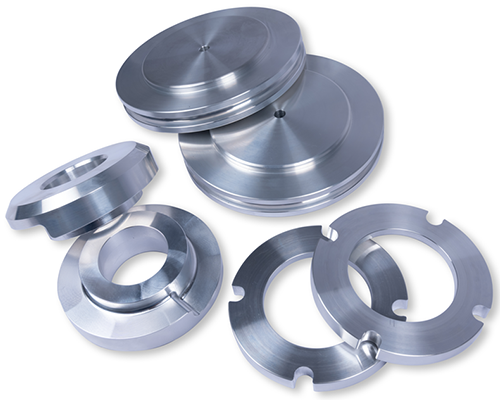
On this build, the difference came down to one part: the top hat. Westcott’s billet top hat has a half-inch of lift built into it, along with a Unibal (uniball) bearing so that force stays centered on the shock shaft during flex and articulation, rather than putting thrust on it at an angle.
Skip that top hat — or swap in a version without the built-in half inch — and the front of the truck sits noticeably lower. That’s exactly what happened to another 4Runner owner who wanted a slight rake and left the top hat out of his build. He ended up with a half-inch rake from front to rear — more than he expected from what looked like a small change.
Westcott makes two versions of the top hat for exactly this reason:
- Billet top hat with a half-inch of built-in lift — used on this TRD Pro build, and the option that produces a level stance front to back.
- Replacement top hat with no added lift — about half the thickness of the lifted version, designed for owners who want to preserve more factory rake.
Ride Height, Before and After
On this TRD Pro 4Runner, Westcott measured the truck before and after the lift to confirm exactly how much height was gained at each corner:
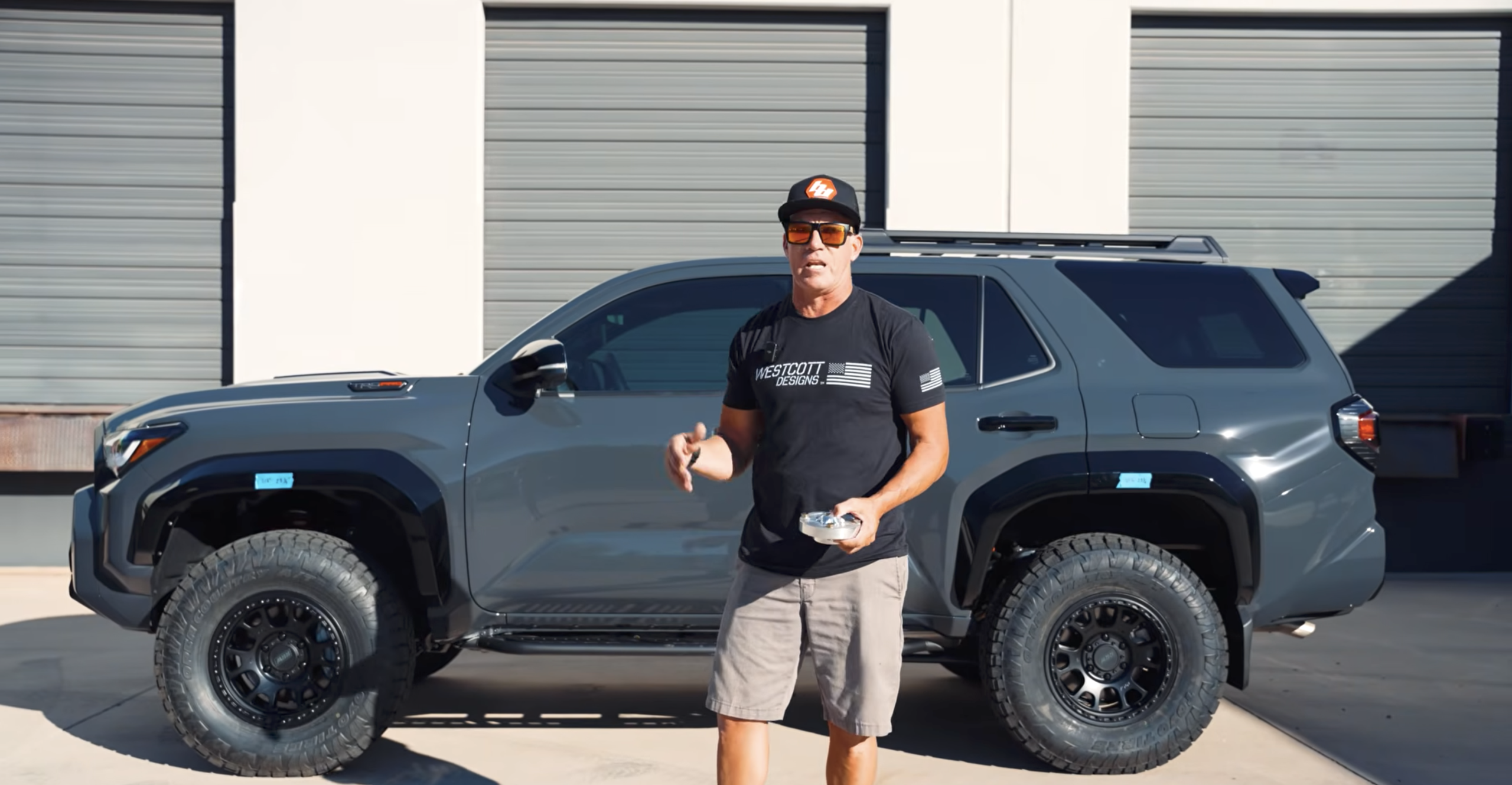
With the billet top hat, the lower collar up front, and the billet upper spacer puck in the rear (the rear puck adds 1 inch, and the factory rubber isolator is reused to keep noise and vibration from transferring into the cabin), the finished truck measures out level front to back — even though a quick corner-to-corner glance can trick the eye into thinking one end sits higher.
Choosing the Look That’s Right for Your Build
A truck viewed straight-on can look perfectly level, while the same truck viewed from a rear or front corner can appear higher on that end — even when the measurements are dead even. That’s why it’s worth deciding on a target stance before ordering parts, rather than after.
- Want a clean, level stance at all speeds? The billet top hat with the built-in half-inch lift is the setup to run.
- Want to keep a bit of factory-style rake, with the truck settling slightly in the rear under acceleration? The standard-thickness replacement top hat preserves more of that look.
Either way, the components should be matched intentionally — not left out by accident, the way a half-inch difference can turn into more rake than expected.
Final Thoughts
Whether a lifted 4Runner ends up level or slightly raked comes down to a few key components — most of all, the top hat. Westcott Designs builds both options specifically so owners can dial in the exact stance they’re after, rather than leaving it to chance.
Have questions about which lift kit setup fits your 4Runner or other Toyota/Lexus build? Reach the Westcott Designs team at westcottdesigns.net or by phone at (480) 750-8747.