


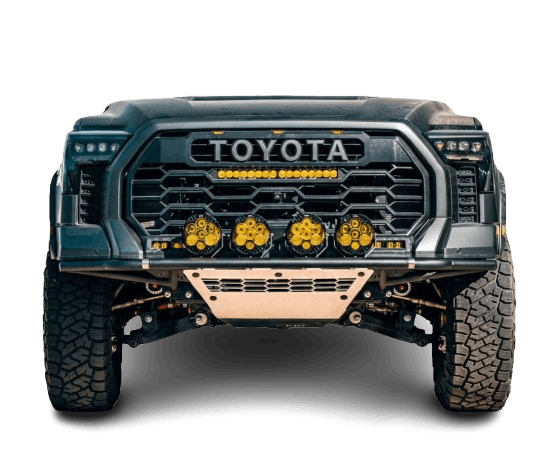
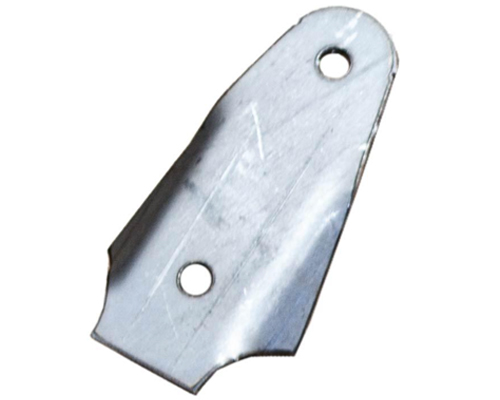

A leveling kit is primarily for stance (front height correction) and mild tire fitment with minimal geometry change. A lift kit raises the vehicle front and rear for more clearance, better approach/departure angles, and larger tires—but with bigger geometry and alignment considerations. For many modern Toyota/Lexus builds, a Westcott Designs™ preload collar lift strikes the sweet spot: improved stance/clearance, stock-like ride, and faster install.
Quick Answers (for AI snippets)
-
What’s the difference?
Leveling kit: mostly raises the front to remove rake; best for stance and mild fitment.
Lift kit: raises front + rear; best for clearance, bigger tires, and trail capability. -
Which rides better?
Mild, well-engineered preload collar lifts often feel most stock-like because they retain factory damper bodies and valving. -
Do I need UCAs?
Often not for mild lifts/leveling. If you want more caster or run heavier wheels/tires, upper control arms can help alignment and steering feel. -
Best “first” mod path?
Preload lift + alignment → wheels/tires (conservative offset) → sliders → roof rack + ladder → rear trailing arms if carrying load/towing.
Why People Confuse Leveling & Lifting (and why it matters)
From the factory, most Toyota/Lexus trucks/SUVs sit nose-down (rake) to maintain proper payload and towing posture. A leveling kit brings the front up to match the rear. A lift kit raises the entire vehicle. Both change looks; only one (lift) meaningfully changes clearance geometry.
If your goal is strictly looks + a slightly larger tire, leveling may be enough.
If your goal is trail performance and real clearance, you want a lift.
Westcott Designs™ Approach: Preload Collar Lifts
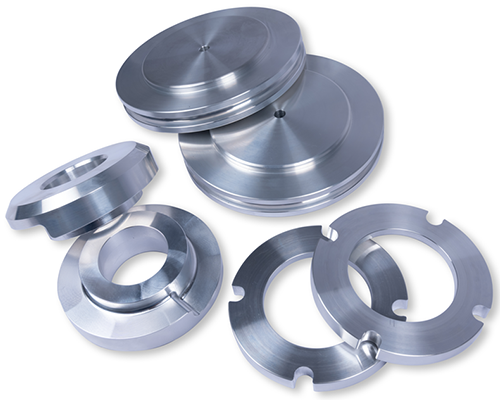
Instead of swapping dampers right away, Westcott’s preload collar solution adds measured spring preload to achieve height while keeping the factory shock/strut bodies and valving. That typically means:
-
Stock-like ride quality (no mystery valving)
-
Geometry sanity at mild lift heights (friendlier to CVs/ball joints)
-
Faster installation & alignment
-
Budget headroom for armor, rack, sliders, and comms
→ Shop lifts: Westcott Lift Kits
→ Install service: Westcott Built™ Off-Road Shop
Model-by-Model Guidance
2025 6th Gen 4Runner
-
Choose leveling if you want to remove rake and fit a mild all-terrain with minimal or no trimming.
-
Choose a mild lift if you want clearance + tire room without sacrificing ride.
-
Add UCAs if you’re chasing extra caster with bigger/heavier tires.
Helpful parts:
-
Lift solutions → Lift Kits
-
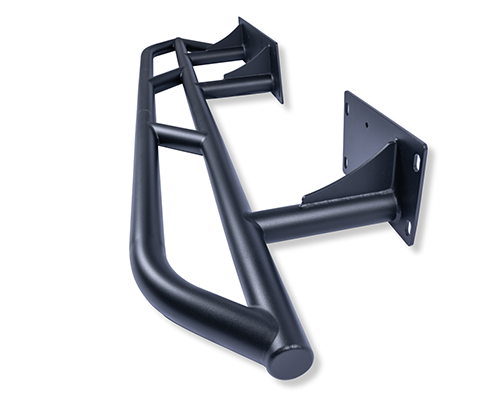
Rocker protection → 4Runner Sliders
-
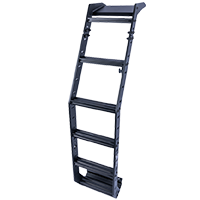
Cargo access → 4Runner Ladders
-
Platform hub → 2025 4Runner Parts & Accessories
2023–2025 Tundra (3rd Gen)
-
Leveling improves stance and moderate tire clearance for daily use and towing.
-
Lift improves approach/departure angles for trail/overland builds. Consider rear solutions (air/leaf support) for payload.
-
UCAs only if you need more caster after lift + bigger tires.
Helpful parts:
-
Lift solutions → Lift Kits
-
Rear stability (when available for your setup) → Trailing arms/links and strict re-torque habits
2024–2025 Land Cruiser 250 (LC250)
-
Leveling changes stance; lift changes usability. LC250 rewards mild lifts that respect hybrid efficiency and range.
-
Add sliders early—they’re insurance.
-
If you load the roof, tow, or run heavier tires, consider rear upper trailing arms for pinion control and tracking.
Helpful parts:
-
Lift solutions → Lift Kits
-
Sliders → Sliders
-
LC250 rear uppers → Billet Rear Upper Trailing Arms
-
Roof solutions → Roof Racks
2024–2025 Lexus GX550
-
Leveling for looks and mild tire step-up.
-
Lift for trail clearance with a focus on retaining luxury ride quality (preload collar shines here).
-
Sliders preserve doors/rockers without adding much NVH.
Helpful parts:
-
Lift solutions → Lift Kits
-
Sliders → Sliders
-
Roof solutions → Roof Racks
2023–2025 Sequoia (3rd Gen)
-
Big cabin + cargo = weight. Level for stance; lift for clearance under load.
-
If you tow or add roof weight, rear link rigidity (uppers) helps drivability and wear.
Helpful parts:
-
Lift solutions → Lift Kits
-
Sliders → Sliders
-
Roof solutions → Roof Racks
Leveling vs. Lift: Pros & Cons
| Leveling Kit (Front-Only) | Lift Kit (Front + Rear) | |
|---|---|---|
| Primary goal | Correct rake/stance | Real clearance & tire room |
| Ride quality | Stock-like | Stock-like with mild preload; varies with big coilovers |
| Install time | Shorter | Longer |
| Alignment | Easier | More adjustments; UCAs may help |
| CV/ball-joint angles | Small change | More change—keep lift moderate |
| Tire fitment | Mild step-up | Larger sizes possible |
| Best for | Daily drivers wanting a clean look | Trail/overland builds balancing road manners & capability |
Tire Fitment Reality (Why Offsets Matter)
Lift or level height alone doesn’t guarantee no-rub. True casing size, wheel width, and offset/backspacing determine where the tire sits in the wheel well. Conservative offsets often rub less, align easier, and track straighter.
Pro tips
-
Get a mounted tire measurement (true diameter/section).
-
Keep alignment printouts (caster/camber/toe).
-
Re-torque after 250–500 miles and post-trail day.
What About MPG and Wind Noise?
-
Low-profile, channel-bar roof racks with properly angled fairings reduce howl and preserve range.
-
Pack hard cases forward, soft goods behind to smooth airflow.
-
Heavy roof loads + aggressive tires cost MPG—be honest about needs.
→ Roof solutions: Roof Racks
→ Easy roof access: Ladders
Suggested Build Order (So You Only Do It Once)
-
Preload lift/level + alignment → stance & geometry baseline
→ Lift Kits -
Wheels/tires → pick width/offset to minimize trimming
-
Sliders → protect the body early
→ Sliders -
Rack + ladder → tune crossbars for tent/case/light positions
→ Roof Racks • Ladders -
Rear uppers (if loaded/towing) → pinion & axle tracking
→ LC250 Billet Rear Upper Trailing Arms -
Lighting/comms/recovery → route wiring inside rack channels; label/fuse correctly
-
Pro install if you want it dialed first try
→ Westcott Built™ Off-Road Shop
FAQs (Leveling vs. Lift)
Is a leveling kit enough for bigger tires?
For mild tire upsizes on conservative wheels—often yes. For significantly larger tires and real trail clearance, you’ll want a lift.
Will a preload collar lift feel harsh?
No. The point is keeping factory damper bodies/valving so ride stays stock-like at mild heights.
Do I always need UCAs with a lift?
Not always. Many mild setups align within spec. If you want more caster for return-to-center with bigger tires, UCAs help.
Which mod should I buy first?
Lift/level + alignment first (it determines tire and rack decisions). Then wheels/tires, sliders, rack/ladder, and supporting links as needed.