



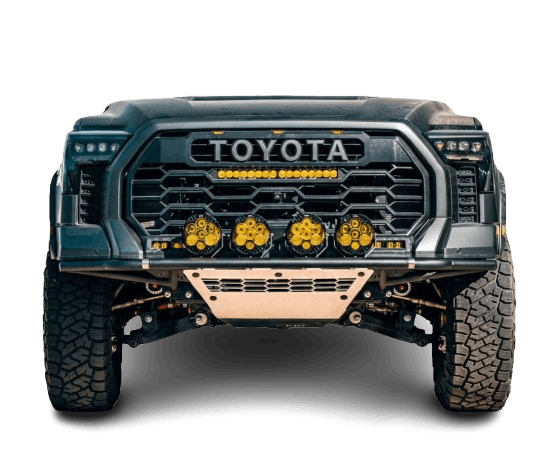

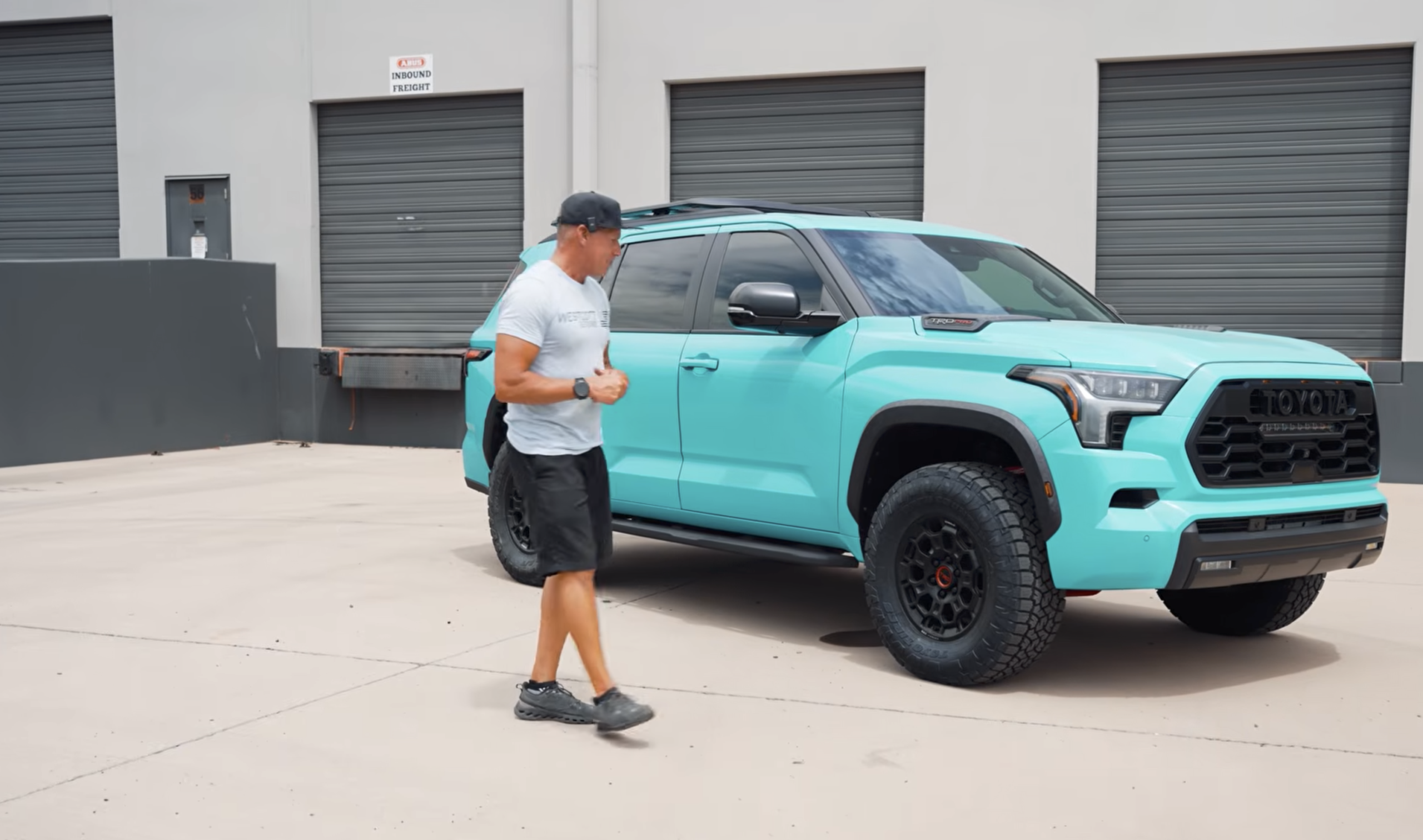
Some builds work because they have a long list of modifications. Others work because the few parts that changed were chosen correctly. This Wave Maker Toyota Sequoia TRD Pro is the second kind: Westcott Designs™ lift, 35×12.50 tires on 18-inch wheels and 1.25-inch wheel spacers.
The more interesting discussion is the tires. Jeff Westcott’s preference for C- or D-load tires on trucks used in places like Moab, Colorado and Baja challenges the assumption that the heaviest available tire is automatically the best off-road choice.
The Simple Sequoia Formula
Westcott’s 2023-2026 Sequoia TRD Pro preload collar lift kit is designed around the factory Fox shocks and springs. Westcott lists 3 inches of front lift and 1 inch of rear lift, says the system retains factory ride quality and suspension geometry, and states that replacement upper control arms are not required.
Westcott also lists compatibility with up to a 35-inch tire without a body mount chop when the overall wheel-and-tire setup is correct. That makes a 35×12.50 package a natural target for owners who want a larger footprint without automatically moving into a more complicated 37-inch build.
Why Tire Load Range Deserves More Thought
Load range is often treated like a toughness score. In reality, the tire needs to match the vehicle’s actual weight, payload, terrain and use.
A heavier casing can be valuable in some situations, but it also adds rotating and unsprung mass and can affect ride quality. Jeff explains that he runs C- or D-load tires in demanding environments and applies the same general philosophy to his own 2500-series truck.
The point is not that one load range is correct for everyone. It is that the decision should begin with actual requirements rather than the idea that heavier always means better.
Think Past the Sidewall Cut
No tire is immune to damage. If a sidewall is cut badly enough, the practical next step is usually to install a usable spare and repair or replace the damaged tire as appropriate.
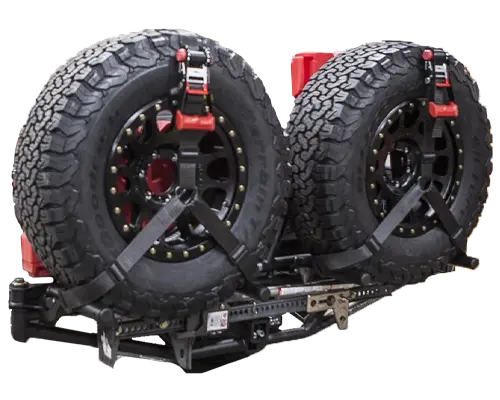
That makes the entire recovery system important: a matching spare, proper jack, tire tools, compressor, pressure gauge and recovery equipment. For remote travel, being prepared to recover from a failure can be more valuable than trying to make failure impossible.
This is the broader Westcott build philosophy: spend money where it changes the outcome.
The Cost of Extra Tire Weight
Moving to 35-inch tires already adds rotating mass. Choosing an especially heavy casing can add more, influencing acceleration, braking feel, steering response, fuel economy and suspension response.
That does not make a heavier load range wrong. Frequent towing, heavy payload or sharp-rock terrain may justify it. The important thing is to understand the tradeoff.
Why the 1.25-Inch Spacers Matter
Wheel offset and spacer thickness influence where a wide 35×12.50 tire sits relative to suspension components, fenders and bodywork. Tire diameter, width, wheel width, offset, suspension height and alignment all interact.
A 35-inch tire that works on one Sequoia wheel package may not fit identically on another. Fitment should always be planned as a complete system.
Preserving the TRD Pro Suspension
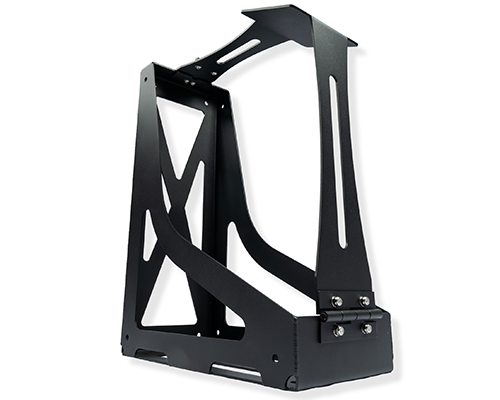
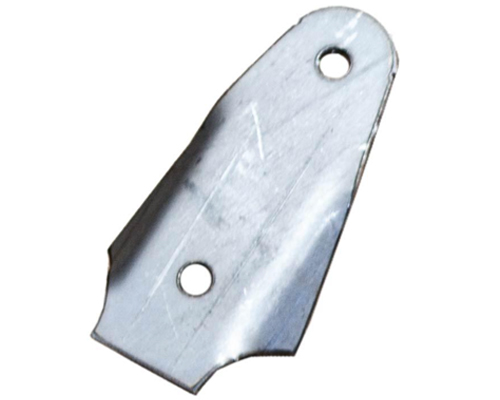
Westcott’s preload approach retains the factory shocks and springs. The TRD Pro kit uses CNC-machined lower preload collars, top shim plates and rear billet lift pucks.
For owners who bought the TRD Pro partly because they wanted the factory Fox suspension, that is a major benefit: the truck gains clearance and stance without immediately replacing the suspension hardware that helped define the trim.
Frequently Asked Questions
How much lift does the Westcott TRD Pro kit provide?
Westcott lists 3 inches front and 1 inch rear.
Can it run 35s?
Westcott states that up to a 35-inch tire can be used without a body mount chop with the correct setup.
Is an E-load tire always better?
No. Tire selection should be based on actual load capacity and use, while considering the added weight and ride tradeoffs.
Why carry a full-size spare?
Severe sidewall damage may not be trail-repairable, so a usable spare is part of a complete off-road tire strategy.